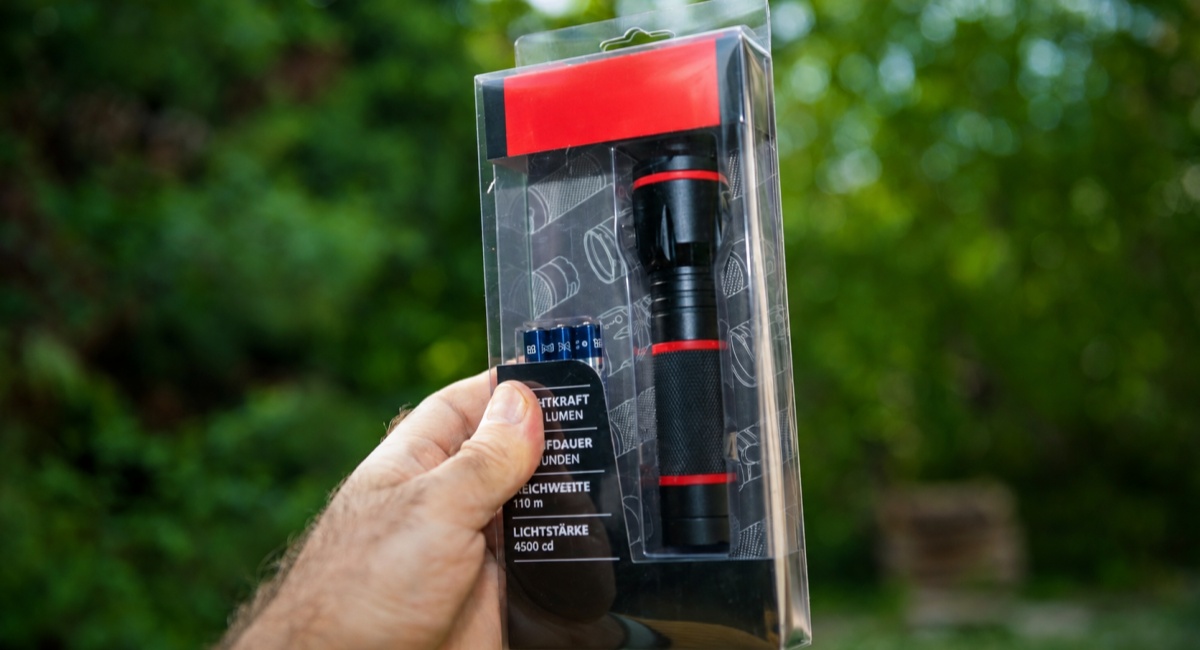
Headlights are not just LED lights tied to the belt, and flashlights are not just lumen values on the packaging box. For outdoor brands, distributors, work clothes suppliers and e-commerce companies, the real challenge is to find a manufacturing partner that can continuously provide appropriate beam mode, battery life, durability, battery performance and complete documents, not just the partner with the lowest quotation.
Petzl is the benchmark of the high-end headlamp market: buyers in this market segment expect reliable performance, ergonomics and clear specifications. However, this does not mean that China OEM projects should imitate or establish any association with a specific brand. The practical problem is how to transform its own market positioning into measurable product demand, and then find a factory that can meet these needs.
This guide breaks down how to find reliable headlamp manufacturers in China, how to compare flashlight manufacturers, and how to choose between OEM development and own-brand manufacturing.
Whether you manage this process in-house or partner with a professional China sourcing agent like Keen Sourcing, the key is understanding exactly what needs to be verified before you commit to any supplier. From supplier verification and factory audits to production monitoring and compliance checks, this article provides a practical roadmap to help you de-risk your supply chain and manage procurement effectively.
How to find a reliable manufacturer of headlights and flashlights in China?
First of all, we should start with the product category and technical complexity, rather than searching the supplier list extensively. Guangdong, especially Shenzhen and Dongguan, is an important source of electronic outdoor equipment and LED lighting products, but a regional cluster is only a clue, which does not prove that a company must produce headlights.
Search terms such as “China headlamp manufacturer”, “China flashlight manufacturer”, “China flashlight supplier” and “China headlamp OEM supplier” can build an initial list. Add specific product-related terms—such as rechargeable headlights, waterproof headlights, induction headlights or tactical flashlights—to avoid comparing factories that produce essentially different products.
Suppliers may be factories, trading companies, assemblers or export intermediaries. Please obtain the registered company name, production address, business scope, product catalogue, list of key technological processes and production capacity certificate. Then compare the company shown in the business license with the company on the quotation, the contract signatory, the payee and the acceptance record. Any unexplained differences need further verification.
Factory audit should not be limited to inspection of machinery and equipment. It should also review the control of incoming materials, traceability of LED and battery, assembly and welding processes, waterproof method, aging test, calibration of test equipment, defect records, corrective measures and outsourcing control. If suppliers outsource battery pack or PCB assembly, they should disclose this situation and explain how to control these outsourced suppliers.
Supplier verification checklist
- Confirm the legal entity, registered address, factory locationand contracting party.
- Match quotations, contracts, invoices and bank payees with verified entities.
- Review product-specific processes, component traceability, test equipment and subcontractors.
- Check the consistency of samples and require evidence of key performance statements.
Preliminary verification of suppliers: What to ask and why?
| Evidence to request | What it helps verify |
|---|---|
| Business licence and registered entity | Whether the contracting and invoicing entity is identifiable |
| Factory address and production walk-through | Whether the claimed site and processes are real |
| Product-specific BOM and process flow | Whether the supplier understands the product beyond sales claims |
| Key component suppliers and traceability | Whether LED, battery, PCB, and charger inputs can be tracked |
| Recent test reports and calibration records | Whether performance claims are measured and repeatable |
| Subcontractor list and controls | Whether outsourced processes are disclosed and managed |
What should I pay attention to when choosing China OEM headlamp and flashlight manufacturers?
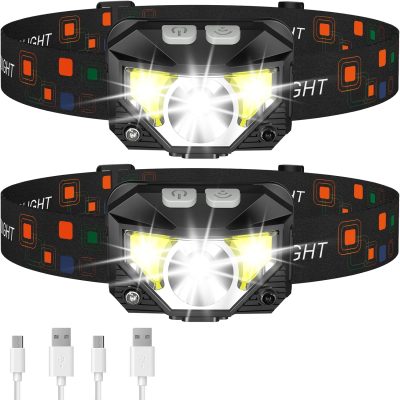
An excellent headlamp OEM manufacturer must transform the user’s demand into a stable optical, electrical, mechanical and ergonomic design. The LED itself is only a part of the system. The geometry of the reflector or lens, beam angle, spot and floodlight, color temperature, driver design, heat dissipation management and user interface logic will all affect the user experience. For headlamps, factors such as weight distribution, strap comfort, tilt adjustment, wearing gloves to operate buttons and preventing accidental starting are as important as peak brightness.
Battery design is another key area. Be sure to confirm the chemical composition, capacity, supplier, protection circuit, charging method, connector and battery replacement policy. For the OEM project of a rechargeable flashlight, it is necessary to test the charging performance, overcharge and overdischarge protection, temperature rise, low battery indication and battery life in the actual working mode. If the battery cell specifications and test methods are not documented, it is meaningless to claim that the battery capacity is high.
The following comparative information helps to organize supplier review:
Performance data to be included in inquiry sheet and sample test plan
| Parameter | What to define | Why it matters |
|---|---|---|
| Light output | Output by mode and whether peak or sustained | Prevents a single peak-lumen figure from masking rapid step-down |
| Beam distance / intensity | Test method, beam pattern, candela and distance | Shows whether the beam suits close work or long-range use |
| Runtime | Mode, battery condition, ambient temperature, cutoff definition | Makes runtime claims comparable |
| Water / dust protection | Required IP rating and applicable test conditions | Protects seals, switches, ports, and battery compartments |
| Impact resistance | Drop height, surface, orientation, and post-test function | Checks real-world durability |
| Battery / charging | Cell model, capacity, protection, charging time and temperature | Addresses reliability, user safety, and shipping documentation |
How to choose OEM, ODM and own brand headlight manufacturing?
OEM, ODM and private brand are all business models, not a universal guarantee of customization or ownership. In the typical OEM mode, the buyer provides a clear specification or design, and the manufacturer produces according to it. ODM is usually based on the manufacturer’s existing customizable design. Private brand usually refers to OEM production of existing products, with limited changes to packaging, color or some functions. The actual responsibility varies from contract to contract, so it must be clearly stipulated in writing.
If your differentiation advantage depends on a brand-new housing, optical system, user interface, battery architecture or accessory ecosystem, then a customized flashlight manufacturer may be the right choice. If you need to use the existing platform to quickly verify the market, then OEM headlights may be more suitable. However, these two schemes are not necessarily cheaper: customized molds, engineering samples, firmware, testing and design modification will all make small-batch OEM projects expensive, while standard models may limit differentiation and make you mainly rely on price competition.
Before asking about the minimum order quantity and mold cost, please distinguish the one-time development cost from the recurring unit cost. Ask for quotations for several actual ordered quantities, and ask which costs will change with the quantity: parts, assembly, packaging, testing, freight preparation and mold amortization. Confirm the ownership of CAD files, molds, firmware, test fixtures and customized patterns; who has the right to authorize changes; and whether the factory can reuse or sell project-specific designs. Don’t take it for granted that paying the mold fee will automatically solve the problem of intellectual property ownership.
OEM, ODM, and private label compared
| Model | Typical starting point | Buyer control | Main trade-off |
|---|---|---|---|
| OEM | Buyer specification or design | High, subject to contract and factory capability | More development work, validation, and coordination |
| ODM | Manufacturer's existing design | Medium; customization depends on platform | Faster route, but design differentiation may be limited |
| Private label | Existing catalogue model | Usually focused on branding and selected options | Lower development burden, but less product exclusivity |
How to verify the performance of headlights and flashlights before placing OEM orders?
Don’t approve samples just because of “sufficient brightness” or a single maximum lumen value. When making a test plan, we should consider the actual use of customers. ANSI/PLATO FL 1 provides standardized methods and reports for the performance of portable lighting equipment, including light output, beam distance, peak beam intensity, running time, impact resistance and waterproof and dustproof performance. The current 2025 edition also covers short-term high-brightness statements. Please ask the supplier which version and method their data follow, and obtain relevant reports when necessary.
Compare performance in different modes, not just turbo or boost mode. Headlights advertised with high peak output power may rapidly reduce the output power due to thermal restrictions. Record the initial output power, continuous output power, running time, temperature and conditions for measuring each value. Similarly, the word “waterproof” is too general: the expected protection level and test method should be clearly stated, and the assembled products—including switches, charging ports, seals and battery compartment covers—should be verified.
Use the approved “gold sample” as a reference for mass production. Record the exact versions of the LED, battery, PCB, firmware, lens, case, strap, package and label. If any component changes after approval, written change control is required, and whether the change will affect the performance, safety, compliance or the validity of previous test results must be evaluated.
How to ensure quality control and US compliance of OEM flashlights in China?
Quality control should be carried out in three stages: before production, during production and before delivery. Review and confirm the approved materials and samples before production. Inspection in production can find problems in assembly, welding, wiring, sealing and appearance before the whole order is completed. Pre-shipment inspection checks the finished product batch against the agreed specifications, packaging, labels, quantity and process standards. The classification and acceptance criteria of defects should be clearly defined in the procurement contract, rather than negotiating after the inspection is unqualified.
AQL sampling can assist batch acceptance, but it cannot replace product engineering or safety testing. ISO 2859-1:2026 stipulates the batch-by-batch acceptance sampling scheme based on AQL. Before production, an agreement should be reached on the inspection level, AQL value, sample size, key defect treatment method and acceptance/rejection quantity. For high-risk batteries or electrical components, targeted functional and safety inspections should be added, not just relying on visual sampling.
US compliance depends on specific product configurations and declarations. Lithium batteries used for transportation must meet the design and testing requirements of Section 38.3 of the United Nations Manual of Tests and Standards; please get the battery test summary and confirm that it matches the actual battery type. United Nations Section 38.3 is a transportation requirement, not a comprehensive certification of the safety of the whole headlight. If the product contains a radio transmitter or other RF function (such as Bluetooth or wireless control), please check whether the FCC equipment authorization requirements are applicable. If a button cell is used, please evaluate the applicable CPSC requirements according to the Reece Act and 16 CFR Part 1263. In addition, please verify the country-of-origin logo and avoid using the unconfirmed “Made in America” statement. RoHS, UL and other requirements should be evaluated according to the target market, product design and sales channels; these certifications are not universal and cannot be used interchangeably.
Practical quality-control plan
| Stage | Checks to agree before ordering |
|---|---|
| Pre-production | Approved golden sample, BOM, drawings, labels, packaging, critical dimensions, test plan |
| During production | Assembly workmanship, soldering, wiring polarity, sealing, charging function, defect trend |
| Pre-shipment | Appearance, functions and modes, accessories, labels, carton marks, quantity, sampling criteria |
| After inspection | Corrective-action report, re-inspection rules, shipment release authority, retained samples |
Pre-order product and compliance checklist
- Freeze the product specification, BOM, golden sample, packaging, and approved labels.
- Define output modes, runtime method, beam data, ingress protection, impact criteria, and battery tests.
- Confirm whether UN 38.3 transport documentation and any RF, button-cell, or market-specific rules apply.
- Agree on inspection stages, AQL plan, defect definitions, corrective actions, and shipment release.
How Can a China Sourcing Agent Help Manage Headlamp and Flashlight OEM Production?
Purchasing agents can reduce the burden of coordination between overseas buyers and many Chinese suppliers, but their service scope should be clearly defined. Effective procurement agency work may include: converting product introduction into RFQ, identifying and verifying manufacturer information, comparing quotations of products with the same specifications, coordinating samples, tracking production progress, arranging inspection or laboratory testing, and managing transportation documents. A purchasing agent should not replace the buyer’s decision on the expected use, technical performance, regulatory strategy or intellectual property protection of the product.
The services provided by Keen Sourcing include product procurement, supplier audit, factory audit, production monitoring, laboratory testing, order follow-up, quality inspection and logistics support. Its product procurement process covers supplier selection and price negotiation, sample approval, production monitoring, pre-shipment inspection and delivery management. According to these service descriptions, buyers can decide whether they need full assistance or only one stage of the service. Before starting cooperation, please be sure to ask for information such as service content, report format, cost structure, conflict-of-interest policy and follow-up responsible person for corrective measures.
Conclusion
Finding the right China OEM flashlight or headlamp partner is a process of reducing uncertainty. Before making an inquiry, we must first make clear the product performance; verify the actual production entity; choose OEM or ODM according to the required degree of differentiation; and integrate sample approval, production control, testing and compliance documents into a traceable process. If the product cannot replicate its certified performance on a large scale, then the supplier’s low price or amazing lumen promotion is not enough.
As an experienced China sourcing agent, Keen Sourcing helps buyers de-risk their headlamp and flashlight OEM projects. We provide end-to-end procurement and quality management—from supplier verification and factory audits to production monitoring. Ready to find your ideal manufacturing partner? Simply reach out through our Contact Us or send email to [email protected] with your product specifications, target market, expected order volume, and customization needs. Our team will kick off a systematic supplier evaluation for you.
Frequently Asked Questions
References
Standards and regulatory applicability should be checked against the current rules for the exact product configuration and destination market.
- ANSI Webstore — ANSI/PLATO FL 1-2025, Flashlight Basic Performance Standard
- Portable Lights American Trade Organization (PLATO) — Revised ANSI/PLATO FL 1 Standard
- S. Department of Transportation, PHMSA — Transporting Lithium Batteries
- S. Department of Transportation, PHMSA — Lithium Battery Guide
- ISO — ISO 2859-1:2026, Acceptance Sampling
- S. Consumer Product Safety Commission — Button Cell and Coin Battery Business Guidance
- S. Code — 19 U.S.C. § 1304, Marking of Imported Articles
- Federal Trade Commission — Complying with the Made in USA Standard

As a Vice President at Keen Sourcing, I am dedicated to helping overseas buyers source reliable products from China with confidence. Based in Shanghai, Keen Sourcing supports international clients through product sourcing, factory sourcing, order follow-up, and quality control, ensuring that every project meets high standards for quality, compliance, cost efficiency, and transparency.
Click and connect Eric Fang on Linkedin