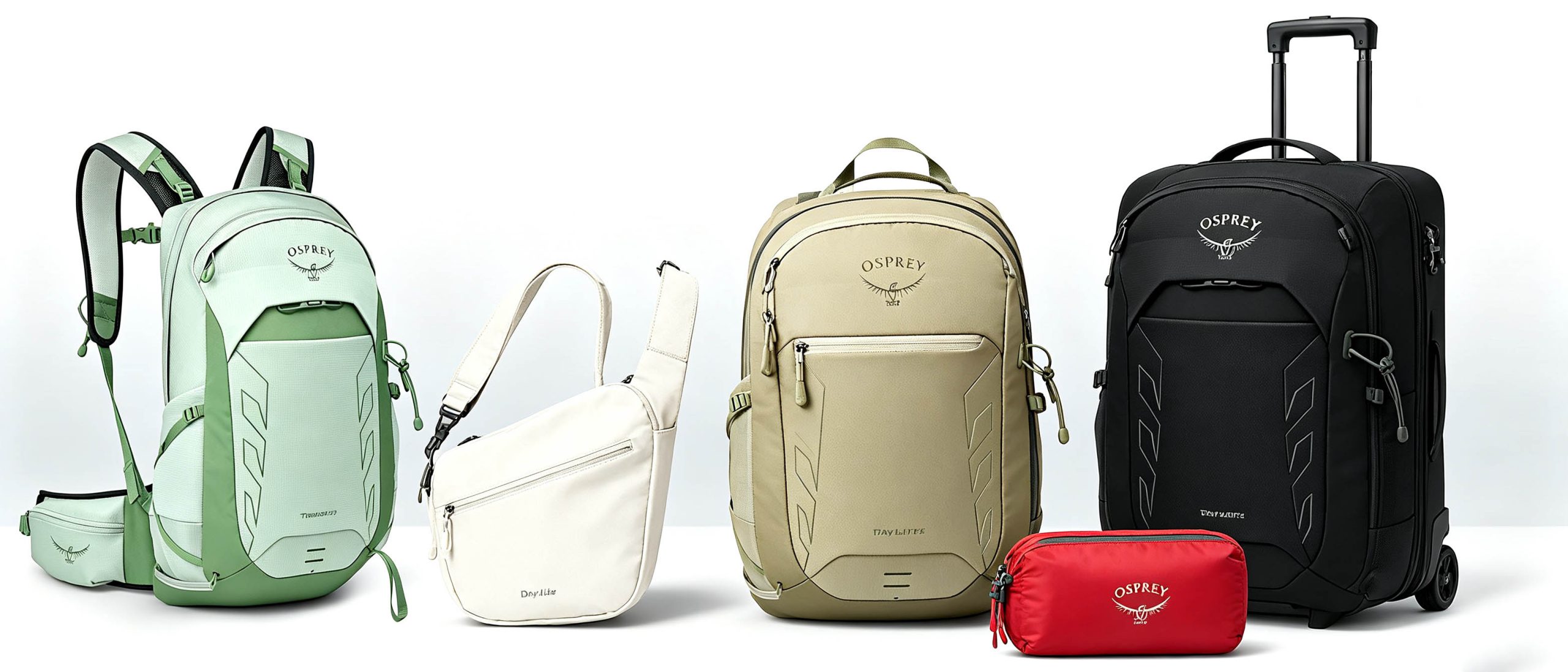
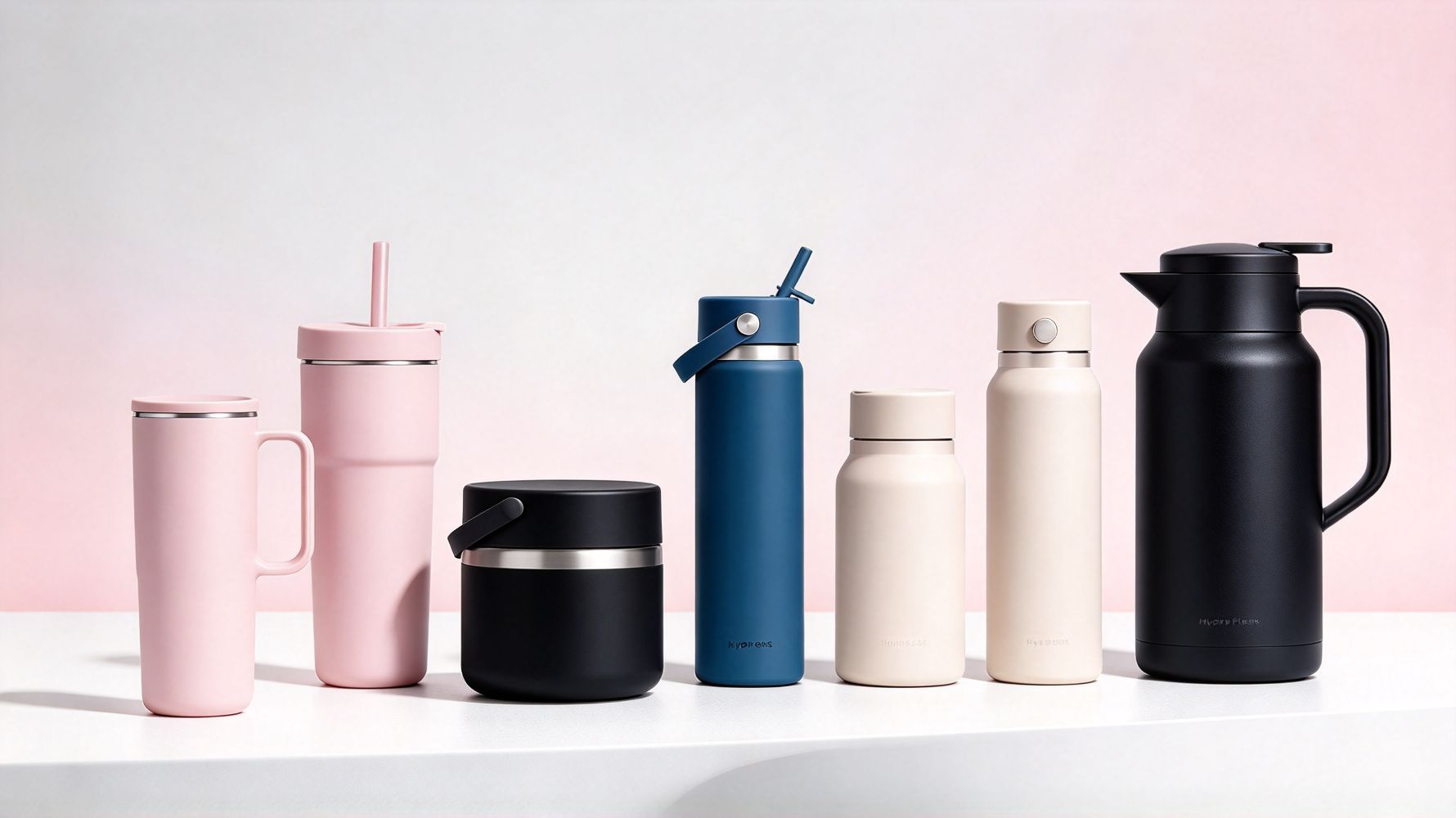
If you are building a water bottle brand and benchmarking against Hydro Flask, the question is not whether you can find a factory in China. It is whether you can find the same tier of manufacturing capability that Hydro Flask relies on—the double-wall vacuum insulation, the laser welding, the powder coating durability, and the quality control discipline that keeps a bottle performing for years. Hydro Flask does not advertise its supply chain. The brand is owned by Helen of Troy and based in Bend, Oregon, but its products are made in China and increasingly in Mexico. The manufacturing partners behind the brand are not publicly listed, and for good reason: they are the source of Hydro Flask’s competitive advantage. As a leading sourcing agent in China that works with drinkware manufacturers, Keen Sourcing knows who these factories are and has worked with them for years. This guide explains what Hydro Flask-level manufacturing actually requires, how to verify a factory’s capability, and how to access the same tier of production for your own brand.
Where Are Hydro Flask Bottles Actually Made?
The Manufacturing Base Behind Hydro Flask
Hydro Flask’s bottles are produced by contract manufacturers in China. The brand’s headquarters and design team are in Bend, Oregon, but the production of the vacuum-insulated bottles takes place in Zhejiang Province’s Yongkang manufacturing cluster. The brand does not own the factories; it relies on long-term OEM partnerships with established drinkware manufacturers who specialize in stainless steel vacuum vessels.
One of these partners is a company founded in 1998 and based in Shanghai. It employs over 1,600 people, operates production facilities covering more than 40,000 square meters, and has an annual capacity exceeding 20 million bottles and vacuum vessels. The company provides OEM and ODM services for brands including Starbucks, Stanley, and Hydro Flask. This is not a marginal relationship—it is a long-term strategic partnership that has shaped the manufacturer’s production systems and quality standards.
Why Yongkang Became the Center of Insulated Bottle Production
Yongkang, known as China’s “Cup Capital,” is the world’s largest production base for insulated water bottles. As of the end of 2025, the city hosts more than 2,900 cup and flask manufacturers and supporting enterprises, producing over 600 million units annually with an output value exceeding 18 billion yuan. The “Yong-Wu-Jin” cluster—covering Yongkang, Wuyi, and Jinyun—accounts for over 70% of China’s cup and flask production and exports, and over 80% of the top European and American insulated bottle brands have their products manufactured in this cluster.
This concentration of manufacturing capability is why Hydro Flask’s supply chain is anchored in Yongkang. The cluster has developed a complete industrial ecosystem—from mold development and stainless steel sheet processing to surface treatment and vacuum sealing—all within a 50-kilometer radius.
What Hydro Flask’s Manufacturing Partner Can Do
The manufacturer behind Hydro Flask’s bottles operates two production bases with a total area of approximately 130,000 square meters and a workforce of over 1,800 employees. The company holds more than 25 product series and 300 product types, all meeting TUV, FDA, LFGB, and Chinese national food-grade standards.
Table 1: Hydro Flask Manufacturing Partner Capabilities
| Capability | Details |
|---|---|
| Established | 1998 (entered drinkware industry in 2004) |
| Location | Yongkang, Zhejiang Province |
| Production facilities | Two bases, total area ~130,000 sqm |
| Workforce | 1,800+ employees |
| Annual capacity | 35+ million bottles and vacuum vessels |
| Certifications | TUV, FDA, LFGB, national food-grade standards |
| OEM clients | Hydro Flask, Starbucks, Xiaomi, Huawei, Supor |
| Key technologies | Water swelling forming, laser welding, vacuum sealing |
Source: Public company disclosures and industry reports.
How the Supply Chain Split Between China and Mexico Affects Buyers
Hydro Flask has expanded production to Mexico in recent years, but the core manufacturing of its vacuum-insulated bottles remains concentrated in Yongkang. For brands developing their own products, this means the same tier of manufacturing capability that produces Hydro Flask bottles is available in China—but only from a small number of factories that have invested in the required equipment and quality systems.
What Does Hydro Flask-Level Manufacturing Actually Require?
The Water Swelling Process That Forms the Bottle Body
Hydro Flask bottles begin as stainless steel coils. The coils are cut into tubes, which are then formed into bottle shapes using a process called water swelling. In this process, water is pressurized inside a steel tube, forcing the tube to expand against a mold cavity. The water swelling process achieves the precise dimensions and shape required for the bottle body. The pressure must be stable and consistent—any variation leads to dimensional inconsistencies that affect vacuum performance and lid fit.
Vacuum Sealing: The Core of Insulation Performance
The vacuum between the inner and outer walls is what makes a Hydro Flask bottle work. The vacuum sealing process is carried out at temperatures approaching 1,000°C, where the air is evacuated, the sealing point is welded, and the assembly is cooled—all under computer control.
The quality of the vacuum determines how long the bottle will maintain temperature. A bottle with a perfect vacuum can keep drinks cold for up to 24 hours. A bottle with a compromised vacuum—caused by a micro-weld defect or incomplete evacuation—will lose insulation performance within weeks. This is why Tier 3 factories test every unit, not just a sample.
Coating and Surface Finish Durability
Hydro Flask’s powder coating is one of its most recognizable features. The coating must resist chipping, scratching, and fading over years of use. The manufacturing process includes multi-stage polishing, ultrasonic cleaning, and powder coating application.
Table 2: Coating Quality Tests for Insulated Bottles
| Test | Standard | Acceptable Result |
|---|---|---|
| Cross-hatch adhesion | 100-grid cut with tape pull | 92+ squares retained out of 100 |
| Impact resistance | Drop test on coated surface | No cracking or delamination |
| Salt spray corrosion | 48–96 hours exposure | No blistering or rust |
| Color consistency | Visual against approved sample | No noticeable deviation |
Source: Third-party inspection standards for stainless steel drinkware.
Lid Assembly and Leak Testing
The lid system on a premium insulated bottle must seal without leaking and open without requiring excessive force. Lid assembly involves fitting silicone gaskets, threading the cap, and testing the seal. A leak test is performed by filling the bottle with water, inverting it, and checking for moisture around the lid. A factory that does not perform 100% leak testing on finished bottles is not operating at Hydro Flask’s level.
How Do You Verify a Factory Can Produce Hydro Flask-Level Bottles?
Factory Audit: What to Check Before You Commit
Not every bottle factory can produce at Hydro Flask’s level. A factory that only assembles bottles from purchased components cannot control vacuum quality or coating adhesion. The audit must verify that the factory owns the critical processes.
Checklist: Factory Audit for Insulated Water Bottle Manufacturing
Material Verification: 304 Stainless Steel and Food-Grade Compliance
Hydro Flask bottles are made from 18/8 (304) food-grade stainless steel. The material is corrosion-resistant, non-toxic, and does not require an internal lining. Grade 201 stainless steel—sometimes used in lower-cost bottles—is not considered food-safe for prolonged contact with beverages.
The factory should provide material certificates for the stainless steel coils and test reports confirming chromium and nickel migration levels are within FDA and LFGB limits. For FDA compliance, food contact substances are authorized under 21 CFR parts 173, 175–178, 179.45, 180.22, 181, and 186. For the European market, LFGB § 31 sets the requirements for materials in contact with food.
Before mass production begins, the factory must demonstrate that its production line can achieve the specified vacuum retention and coating durability. We review material certificates, check vacuum sealing parameters, and test coating adhesion samples against the approved standard. A factory that cannot document these parameters is not ready for premium production.
Our inspectors visit the factory at key production stages: after water swelling, after vacuum sealing, and after coating. We check dimensional accuracy, weld quality, and coating uniformity. We also verify that the vacuum retention test is being performed on 100% of units, not just a sample.
Pre-Shipment Inspection
Before the container is loaded, we conduct AQL-based inspection covering vacuum retention (boiling water test), coating adhesion (cross-hatch), lid fit and leak testing, and packaging integrity. Only bottles that pass all tests are released for shipment.
What Do Hydro Flask’s Best-Selling Bottles Reveal About Manufacturing Standards?
Amazon’s Most-Reviewed Hydro Flask Models
| Product | Capacity | Rating | Review Count | Key Features |
|---|---|---|---|---|
| B083GBMKS3 | 946ml | 4.7 stars | 30,922+ | TempShield insulation, leakproof straw lid, 18/8 stainless steel |
| B07YXM6XTF | 946ml | 4.7 stars | 30,922+ | Wide mouth, leak-resistant Flex Cap, dishwasher safe |
| B0FPYNGX3B | 946ml | 4.7 stars | 30,922+ | Flex Straw Cap, leakproof, BPA-free, fits vehicle cup holder |
Source: Amazon product listings. Review counts verified as of 2026.
What Users Praise and What They Flag
Users praise the bottles’ ability to keep drinks cold for extended periods, the durability of the powder coating, and the leak-proof lid design. Common criticisms focus on the bottle weight when full and occasional denting when dropped on hard surfaces. The durability feedback is the most relevant for brands developing their own products. Users describe bottles that have been in daily use for years with no loss of insulation performance.
How Can Your Brand Source Water Bottles at Hydro Flask’s Manufacturing Level?
Matching Your Product Spec to the Right Factory Tier
The factory you choose must match the complexity of your product. A single-wall promotional bottle requires only basic stamping and assembly. A double-wall vacuum bottle requires water swelling, laser welding, and vacuum sealing. A premium insulated bottle with a powder-coated finish and a custom lid system requires all of the above plus coating adhesion testing and lid assembly capability.
Table 3: Water Bottle Product Tiers and Manufacturing Requirements
| Product Tier | Key Manufacturing Requirements |
|---|---|
| Basic promotional bottle | Stamping, welding, assembly, leak testing |
| Double-wall vacuum bottle | Water swelling, laser welding, vacuum sealing, 100% retention testing |
| Premium insulated bottle | Above plus powder coating, cross-hatch adhesion testing, custom lid assembly |
How Keen Sourcing Helps Buyers Access These Manufacturers
Keen Sourcing has long-term cooperative relationships with the manufacturers that produce Hydro Flask’s bottles and other premium drinkware brands. Because of these relationships, we can help our clients access the same tier of manufacturing capability that Hydro Flask uses—with pricing and payment terms that individual buyers cannot secure on their own.
We do not disclose the identities of our manufacturing partners. What we can tell you is that the capabilities Hydro Flask relies on—water swelling, laser welding, computer-controlled vacuum sealing, powder coating with verified adhesion, and 100% vacuum retention testing—are available from a small number of factories in the Yongkang cluster. We know these factories. We have worked with them for years. If you want an introduction, contact us directly.
Ready-to-Ship Options from Keen Sourcing
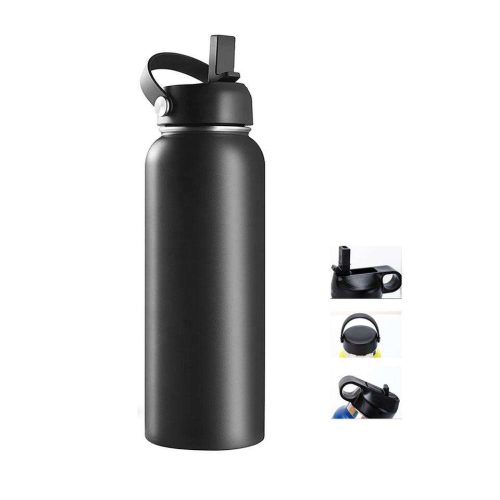
Unit Price: USD $2.3-2.8
Leave online message or send email to [email protected] to order.
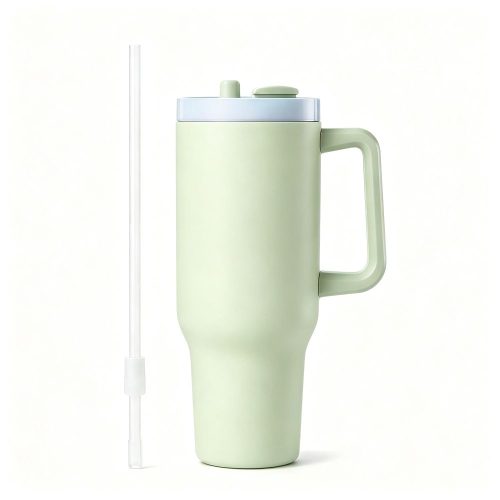
Unit Price: USD $2.1-2.5
Leave online message or send email to [email protected] to order.
If you need a verified insulated water bottle without the full development cycle, we can introduce you to ready-to-ship options produced by our partner factories.
Or contact our team to discuss a fully custom water bottle project built to your specifications.
Frequently Asked Questions
Conclusion
Hydro Flask’s manufacturing advantage is not a secret material or a patented process. It is the combination of a perfect vacuum seal, a durable powder coating, and a quality system that tests every unit. Those capabilities exist in China’s Yongkang manufacturing cluster, and the factories that possess them are the same factories that produce bottles for Hydro Flask and other premium brands.
For brands developing their own insulated water bottles, the path forward is to access the same tier of manufacturing capability—not to copy Hydro Flask’s product line, but to build your own with the same performance standards. Keen Sourcing works with factories at this level. We know who manufactures Hydro Flask’s bottles and have worked with these factories for years. If you want an introduction, contact us directly-leave online message or write to [email protected].
References
- U.S. International Trade Commission. “Harmonized Tariff Schedule Search.” https://hts.usitc.gov/
- Freightos. “Freightos Baltic Index.” https://www.freightos.com/freight-resources/freightos-baltic-index/
- Amazon. “Hydro Flask 32 oz Wide Mouth Straw Lid Stone.” https://us.amazon.com/dp/B083GBMKS3/
- Amazon. “Hydro Flask Water Bottle – Wide Mouth Flex Straw Lid Western Dark Blue.” https://us.amazon.com/dp/B0FPYNGX3B/

As a Vice President at Keen Sourcing, I am dedicated to helping overseas buyers source reliable products from China with confidence. Based in Shanghai, Keen Sourcing supports international clients through product sourcing, factory sourcing, order follow-up, and quality control, ensuring that every project meets high standards for quality, compliance, cost efficiency, and transparency.
Click and connect Eric Fang on Linkedin