
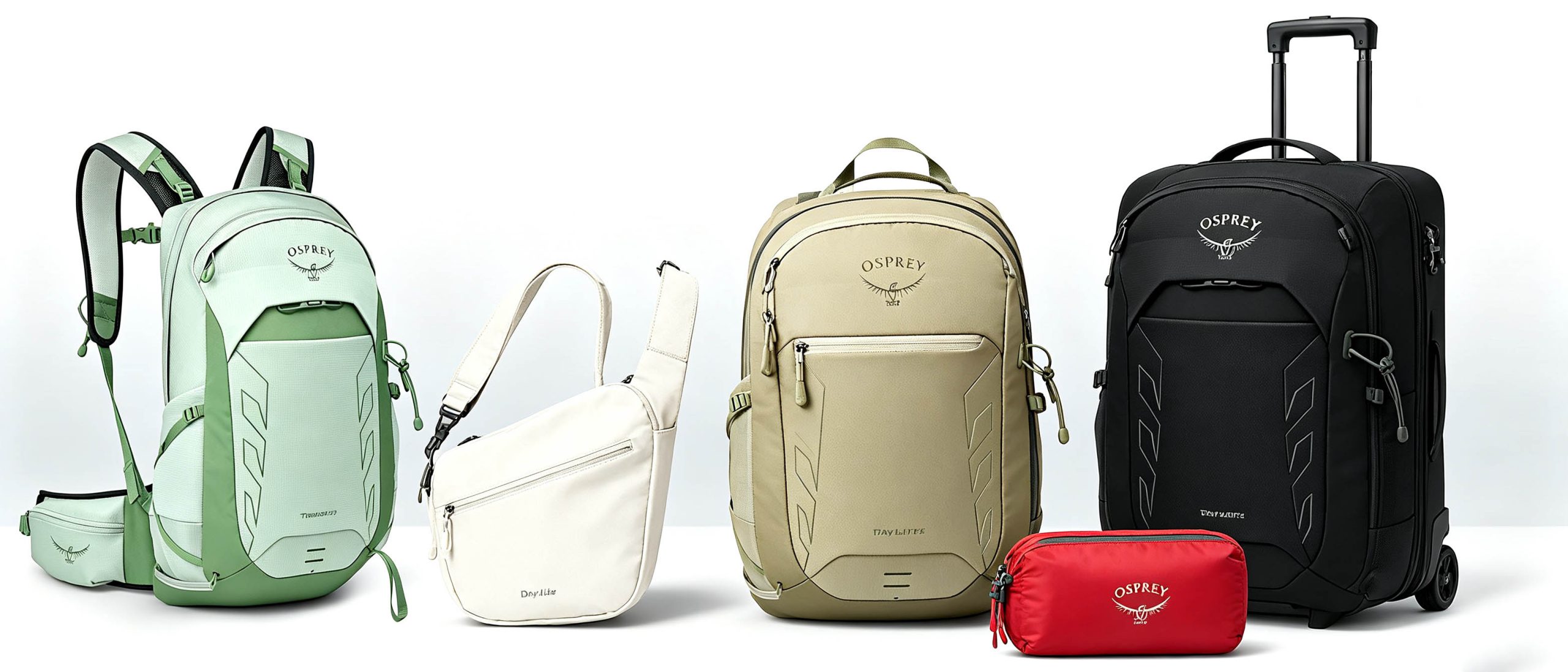
Osprey is known for premium technical packs that retail for $200 and up, but the factory behind them is rarely a single name. The brand operates an asset-light ODM model: design and oversight happen in-house, while manufacturing is outsourced to a small number of long-term partners. The primary production base is Vietnam. But a critical slice of Osprey’s line—its waterproof and welded technical packs—comes from a factory in Dongguan, China, that has spent more than two decades perfecting a manufacturing process most backpack factories cannot execute. This guide breaks down Osprey’s manufacturing structure, the Chinese factory behind its waterproof line, and how your brand can access the same level of manufacturing capability. As a China sourcing agent that works with outdoor gear manufacturers, Keen Sourcing helps buyers navigate exactly this kind of supplier landscape.
Where Are Osprey Backpacks Actually Manufactured?
Vietnam: Osprey’s Primary Production Base
Osprey gradually stopped domestic production in the United States in the early 2000s. All production business was transferred to Vietnam by 2002. Mike Pfotenhauer, the founder of Osprey, moved his family to Ho Chi Minh City in 2003 to personally supervise the local production work. This decision has laid a stable foundation for the brand’s manufacturing development in the past two decades. Osprey has set up a product development office in Ho Chi Minh City. The local Vietnamese team undertakes multiple core tasks, including production supervision, product design innovation and overall quality control. The brand’s suppliers are mainly concentrated in Vietnam, with production resources highly concentrated in two core long-term partner factories.
The above industry status brings clear reference significance for product buyers. High-quality ordinary sewn technical backpacks that reach the standard of Osprey’s mainstream products are all produced in Vietnamese factories. However, these core manufacturers have signed exclusive or semi-exclusive cooperation agreements with Osprey, so they do not accept external brand cooperation orders basically.
China: The Waterproof Line’s Manufacturing Home
Osprey’s waterproof backpack and dry bag series are produced by a designated Chinese manufacturer based in Dongguan, Guangdong Province. The factory was founded in 2000 and has built a secondary production base in Ho Chi Minh City, Vietnam. It has specialized in welded waterproof outdoor bags for more than 20 years and provides OEM production services for several well-known international outdoor brands.
The cooperative relationship between this manufacturer and Osprey is long-term and stable, not a temporary small-scale arrangement. Its global OEM partner list also includes multiple internationally recognized outdoor, marine, and lifestyle brands. The manufacturer owns two modern standardized production bases. Intelligent cutting equipment, precision welding devices, and automatic assembly lines are fully equipped in both factories, supporting large-scale standardized production.
What Osprey’s Dual-Country Manufacturing Means for Buyers
High-frequency welding technology serves as the core production process of waterproof backpack manufacturing. This technology requires professional production equipment and skilled operators, which most ordinary backpack factories cannot provide. The manufacturer’s Dongguan production base employs 280 professional technical and production staff proficient in waterproof welding. Its two factories in Vietnam have more than 1,000 skilled front-line workers in total.
The Pearl River Delta region of China has a complete industrial supporting system. A large number of professional equipment operators, mold makers and raw material suppliers are gathered here. This perfect industrial matching environment forms unique processing specialization advantages, making China the optimal production base for high-standard waterproof backpack products, and this advantage cannot be replicated by other regions in a short time. The enterprise’s dual-base layout in China and Vietnam can also help brands flexibly adjust production locations according to tariff policies and logistics conditions.
Who Is the Chinese Manufacturer Behind Osprey’s Waterproof Line?
Two Decades of Welded Waterproof Manufacturing
The comprehensive strength of Sealock can be clearly reflected through its production scale, staff allocation and industrial qualification certifications. The following table lists its core enterprise information in detail.
| Category | Details |
|---|---|
| Experience | 20+ years in waterproof bag manufacturing |
| Production bases | Dongguan, China + Ho Chi Minh City, Vietnam |
| Chinese facility staff | 280 professional technicians and production staff |
| Vietnam facilities staff | 1,000+ skilled industrial workers |
| Core technology | 27.12 MHz high-frequency welding |
| Certifications | ISO 9001, BSCI, SMETA, HIGG, GRS, SCAN, CSR |
| Services | OEM / ODM, custom logo, color, and capacity |
| OEM clients | Multiple international outdoor, marine, and lifestyle brands |
27.12 MHz High-Frequency Welding: The Process That Makes Waterproof Packs Different
Ordinary backpacks are produced by sewing processing. Professional waterproof technical backpacks adopt welding molding technology. The difference in production processes directly determines the waterproof performance of finished products, which is the key to distinguish products with durable waterproof ability and products that are easy to seep water at stitching gaps.
The factory applies 27.12 MHz high-frequency (HF) welding technology to production. This technology can realize molecular fusion bonding of TPU and PVC coated fabrics. Its working principle is completely different from traditional heat sealing technology. Instead of conducting heat from the material surface to the inside, high-frequency welding generates a special electromagnetic field. The polar molecules inside thermoplastic materials vibrate rapidly under the action of the electromagnetic field. Molecular friction generates uniform heat in the welding area, which softens TPU materials and fuses them into an integrated and continuous structural whole.
The finished products formed by this technology are not simply glued or sewn together. The welding part and the original fabric form a unified material structure. The production process will not produce needle holes, nor will there be problems such as uneven glue coating or single-sided surface bonding. For waterproof backpack products, this technological difference is the core reason why high-standard products can resist rain erosion and keep internal items dry even after passing through flowing water.
| Technical Factor | 27.12 MHz HF Welding | Traditional Bonding Methods |
|---|---|---|
| Bonding method | Molecular fusion inside material | Surface bonding or mechanical joining |
| Waterproof performance | Airtight and watertight seams | Higher risk of leakage points |
| Suitable materials | TPU, PVC, coated polyester, coated nylon | Limited compatibility |
| Typical applications | Dry bags, waterproof backpacks, marine products | General textile products |
Source: Factory technical documentation.
The Full Manufacturing Sequence for a Technical Waterproof Pack
Understanding the complete production process of waterproof technical backpacks can help buyers form a clear inspection standard when evaluating factory capabilities. The whole processing flow from raw material input to finished product delivery is shown below.
Fabric Inspection. All rolls of coated fabrics will be inspected in advance. Workers check the color uniformity, weaving flaws, coating flatness and surface contamination of raw materials. This inspection work is carried out before formal cutting processing, which can effectively avoid finished product seam failure caused by unqualified raw material coatings.
Precision Cutting. Factories adopt CNC automatic cutting or precision die-cutting technology to shape fabric panels. Manual cutting is abandoned in formal mass production, because the size deviation caused by manual operation will continue to accumulate in the subsequent assembly process and affect product quality.
Branding Application. Logo printing is completed when the fabric panels are flat. Multiple processing methods including silk-screen printing, heat transfer printing, embroidery and embossing are optional. Printing on flat fabrics can ensure higher pattern flatness and consistency than printing after product assembly.
Sub-Assembly Sewing. Independent components such as functional pockets, internal partitions and mesh side panels as well as backpack straps are sewn separately. This separate processing mode simplifies the final assembly procedure and supports parallel production of multiple parts to improve efficiency.
Structural Sewing. Load-bearing parts of backpacks are processed with enhanced sewing technology. The connection positions of shoulder straps, D-ring patches and bottom reinforcing layers are sewn along the stress direction, and key stress points are fixed with bartack stitching to improve structural stability.
High-Frequency Welding. The main body panels of backpacks are welded into an integrated waterproof shell through 27.12 MHz high-frequency welding. This key process completely eliminates the needle hole leakage risk existing in traditional sewing products.
Final Assembly. Workers install all supporting accessories including buckles, air valves, woven belts and metal hardware. The roll-top sealing structure is assembled and tested one by one to ensure normal use.
Inspection and Packing. Finished products will go through comprehensive functional tests and visual appearance inspection before packaging. The factory completes water leakage detection and welding seam strength verification to ensure all products meet quality standards before delivery.
Checklist: What to Verify at a Welded Backpack Factory
What Do Osprey’s Best-Selling Backpacks Reveal About Manufacturing Standards?
Amazon’s Most-Reviewed Osprey Models
The user evaluation data of best-selling products can intuitively reflect the public’s recognition of product quality. The following table sorts out several Osprey backpack styles with large review volumes on Amazon platform, covering their capacity, user rating, review quantity and core functional features.
| Product | Capacity | Rating | Review Count | Key Features |
|---|---|---|---|---|
| Osprey Daylite Plus | 20L | 4.7 stars | 3,473+ | Everyday carry, lightweight, side pockets fit 32oz bottles |
| Osprey Farpoint 40 | 40L | 4.6 stars | 2,506+ | Travel pack, carry-on compliant, laptop sleeve, U-zip |
| Osprey Talon 22 | 22L | 4.7 stars | 1,000+ | Hiking daypack, AirScape back panel, hipbelt pockets |
Source: Amazon product listings. Review counts verified as of 2026.
Product review quantity is positively correlated with market sales volume and user satisfaction. Products with more than 3,000 high-star reviews can maintain stable quality in mass production, which is a direct embodiment of standardized manufacturing level rather than simple marketing effect.
What Users Actually Complain About (and Praise)
By sorting out a large number of user reviews of mainstream Osprey backpacks, we can summarize consistent user feedback. Buyers of Farpoint 40 products mostly give positive comments on material texture, structural durability and humanized design. Users of Daylite Plus products recognize the balanced performance of the backpack. It is light enough for daily carrying and has sufficient structural stability to bear daily loads.
The negative feedback of products is relatively concentrated and few in number. Most complaints focus on overall product weight and individual size matching problems. Quality defects such as zipper failure, welding seam separation and hardware damage rarely appear in user evaluations. For emerging brands developing high-end technical backpacks, this stable quality level is the core manufacturing standard to be learned and followed.
The Manufacturing Difference Between Technical and Standard Backpacks
Ordinary backpacks and technical outdoor backpacks have similar appearance, but there are huge differences in internal production structures. Technical backpacks adopt reinforced treatment at the connection of shoulder straps. Key stress points are fixed with bartack stitching, and high-density fabrics are used in wear-prone areas. The product load is transmitted to the hip belt through professional structural design, instead of being simply scattered on the flat backpack panel.
Waterproof technical backpacks have higher production standards. The sewing seams of ordinary backpacks are potential water leakage points. Even with auxiliary seam adhesive tape, water may still penetrate after long-term use. Welded waterproof products fundamentally solve this problem through integrated welding molding. The waterproof performance is determined by the production structure, not just surface coating treatment.
How Can Your Brand Source Backpacks at Osprey’s Manufacturing Level?
Matching Your Product to the Right Manufacturing Capability
Different types of backpack products correspond to different production process standards, and not all products need high-frequency welding technology. Brands need to clarify product functional positioning first, so as to select matching manufacturers and production processes.
How Keen Sourcing Helps Buyers Access Osprey-Level Manufacturing
Keen Sourcing has long-term cooperative relations with high-standard manufacturers, including the factory behind Osprey’s waterproof line. Because of these long-standing relationships, we can help our clients secure more competitive factory pricing and more flexible payment terms—terms that individual buyers rarely access on their own. The team helps emerging brands complete product development and production docking, so that new products can reach the manufacturing level of international high-end outdoor brands. We do not resell finished Osprey products. Our core service is to help global buyers build independent and stable high-quality supply chains.
The following table shows the full-cycle service content of Keen Sourcing in backpack product sourcing projects.
| Stage | What We Do |
|---|---|
| Product specification | Define materials, construction method, hardware, and compliance requirements |
| Factory matching | Identify factories with the specific capability your product requires |
| Factory audit | Verify equipment, certifications, production capacity, and quality systems on-site |
| Sample development | Coordinate prototype production and review against specifications |
| Price negotiation | Negotiate factory-direct pricing and payment terms |
| Production monitoring | Track progress, conduct in-process checks, and manage timelines |
| Pre-shipment inspection | AQL-based final inspection before goods leave the factory |
| Logistics | Coordinate FOB shipping, consolidation, and documentation |
What to Expect in Timeline and Investment
The whole cycle of customized technical backpack development, from initial concept design to final batch delivery, lasts about 90 to 150 days. The whole process includes design confirmation, repeated sample testing, raw material procurement, pre-production confirmation, batch production and finished product inspection.
Checklist: Pre-Development Questions for Your Backpack Project
Ready-to-Ship Osprey-Style Backpacks from Keen Sourcing
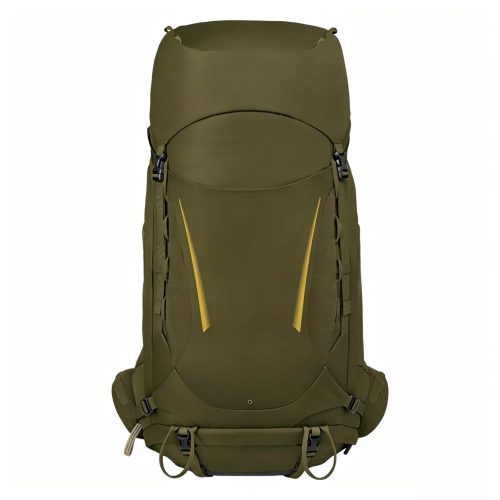
Unit Price: USD $15.71-19.36
Leave online message or send email to [email protected] to order.
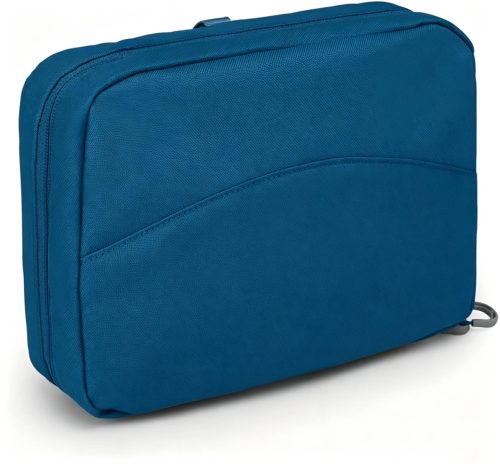
Unit Price: USD 2.73-3.15
Leave online message or send email to [email protected] to order.
Brands that need high-standard technical backpacks in a short time can choose ready-to-ship products. These products have the same manufacturing quality as Osprey’s mainstream products, and can avoid the long 90–150 days customized development cycle. All spot products are produced by verified high-quality cooperative factories of Keen Sourcing.
Brands with customized design demands can visit us to communicate and confirm personalized backpack production projects.
Frequently Asked Questions
Conclusion
Osprey’s mature manufacturing system is built on long-term stable supplier cooperation and strict whole-process quality control, instead of relying on a single factory. The brand’s mainstream sewn technical backpacks are all produced by exclusive cooperative factories in Vietnam, with professional teams locally responsible for design iteration and quality supervision. Its high-standard waterproof technical backpacks and dry bag products are manufactured by a professional Chinese manufacturer with 20 years of HF welding technology accumulation.
For emerging outdoor gear brands, the core of product upgrading is to learn advanced manufacturing technology and quality control standards, rather than simply copying product styles. Brands need to select targeted manufacturers according to product functional positioning, verify the professional production capacity of factories, and strictly control every link from sample development to batch production, so as to launch high-quality technical backpack products that meet market demand.
References
- Osprey Packs. “Meet Osprey’s Vietnam Team: The Sample Room.” https://www.osprey.com/
- Osprey Packs. “Product Development and Quality Control.” https://www.osprey.com/
- IEC. “IEC 60529 – Degrees of Protection Provided by Enclosures (IP Code).” https://www.iec.ch/
- ISO. “ISO 9001:2015 – Quality Management Systems.” https://www.iso.org/standard/62085.html
- Amazon. “Osprey Product Reviews.” https://www.amazon.com/
- GearJunkie. “40 Years of Osprey Backpacks.” https://gearjunkie.com/
- Amazon Seller Central. “Product Safety and Compliance Requirements.” https://sellercentral.amazon.com/help/hub/reference/G200292820

As a Vice President at Keen Sourcing, I am dedicated to helping overseas buyers source reliable products from China with confidence. Based in Shanghai, Keen Sourcing supports international clients through product sourcing, factory sourcing, order follow-up, and quality control, ensuring that every project meets high standards for quality, compliance, cost efficiency, and transparency.
Click and connect Eric Fang on Linkedin


